The Dreaded Facts Of Hip Dysplasia;
The majority of the general population has no idea just what Hip Dysplasia is and what the contributing factors are when it comes to Hip Dysplasia.
33% of Hip Dysplasia is a hereditary defect, so that leaves 67% coming from other factors. I will lay out some simple facts so you can understand it better. I will also give OFA Stats on a few breeds to show just how big of a problem this is.
I will state it right now that from our kennel we have a 3% Hip Dysplasia problem in the dogs we have sold to Families.
We have had German Shepherds for over 20 years, but yet to have even 1 German Shepherd Dog we have owned have Hip Dysplasia. We bred German Shepherds over 10 years with never 1 call from anyone saying their German Shepherd from us had Hip Dysplasia. The first of any Hip Dysplasia ever reported to us was after we added the Native American Indian Dog. We started breeding the Native American Iindian Dog and the mixes of Native American Indian Dog and some calls started coming in with reports of Hip Issues, at that point we had to learn more about Hip Dysplasia.
At 4 months of age a young Puppy can start getting loose Hip Sockets from lack of exercise, that alone is Hip Dysplasia. Any breed with NAID in it doesn't come when called so good, therefore way too many people don't want to let there Puppy off leash to run, play at free will. I will tell you right now, if you keep your Puppy on leash all the time, restrained from running around at free will, it will end up with loose Hip Sockets Gauranteed. A young growing large breed needs several hours daily of free run and play time, without proper exercise the hips will not have the muscle mass it needs to push the femur head tight up into the socket, thus causing a loose socket (Hip Dysplasia) it's called subluxation.
Running up and down stairs at a young age= Hip Dysplasia
Running on a hard surface too much= Hip Dysplasia
Being over fed leads to fast growth in a already fast growing large breed, now the skeletal formation is growing at a rapid pace, thus improper skeletal formation= Hip Dysplasia
Jumping off furniture several times a day= Hip Dysplasia
Stuck in a crate with hardly any room to move around in = Hip Dysplasia
I'm against crates for so many reasons, this being one of them.
A Dogs bones are not fully hardened until 24 months of age, that surprises most people.
Growing too fast from over feeding=Hip Dysplasia
It's out of any breeders hands after that Puppy gets to its new home to regulate any of this. Some breeders will not even have any kind of Hip Guarantee, due to the many causes of Hip Dysplasia.
Anyone can go to OFA to see their stats on any breed and Hip Dysplasia, the numbers move around a little but this is basically how it goes.
With the best breed only having around 2% Hip Dysplasia, then it very slowly and steady rises all the way to around 74% which is Bulldogs having the worst Hips, yet they still get bred and sell for big money.
German Shepherds are at around 20% Hip Dysplasia, but the majority of all breeds have a higher percentage of Hip Dysplasia that the 20%
Australian Shepherds run around 6 to 7% Hip Dysplasia
Now I will show you a video of Dr. Lonnie L. Davis showing you that most Veterinarians do not know how to position the Dog being xrayed for a Hip Evaluation, thus getting a false reading of Hip Dysplasia. In this video he will show you the same Dog with OFA Certified Hip Dysplasia that is positioned wrong, then the very same Dog positioned correctly get a OFA Good Rating, all in how it was positioned. 99% of Veterinarians are just not that trained in this field. Your young or old Dog gets a limp, you take it to your Veterinarian, they improper position, then come out telling you this Dog has Hip Dysplasia. Your have no idea what to look at in the X-ray, so you rely on the DR. but this isn't his/her field of expertise, now you leave the Clinic crying or cursing the breeder.
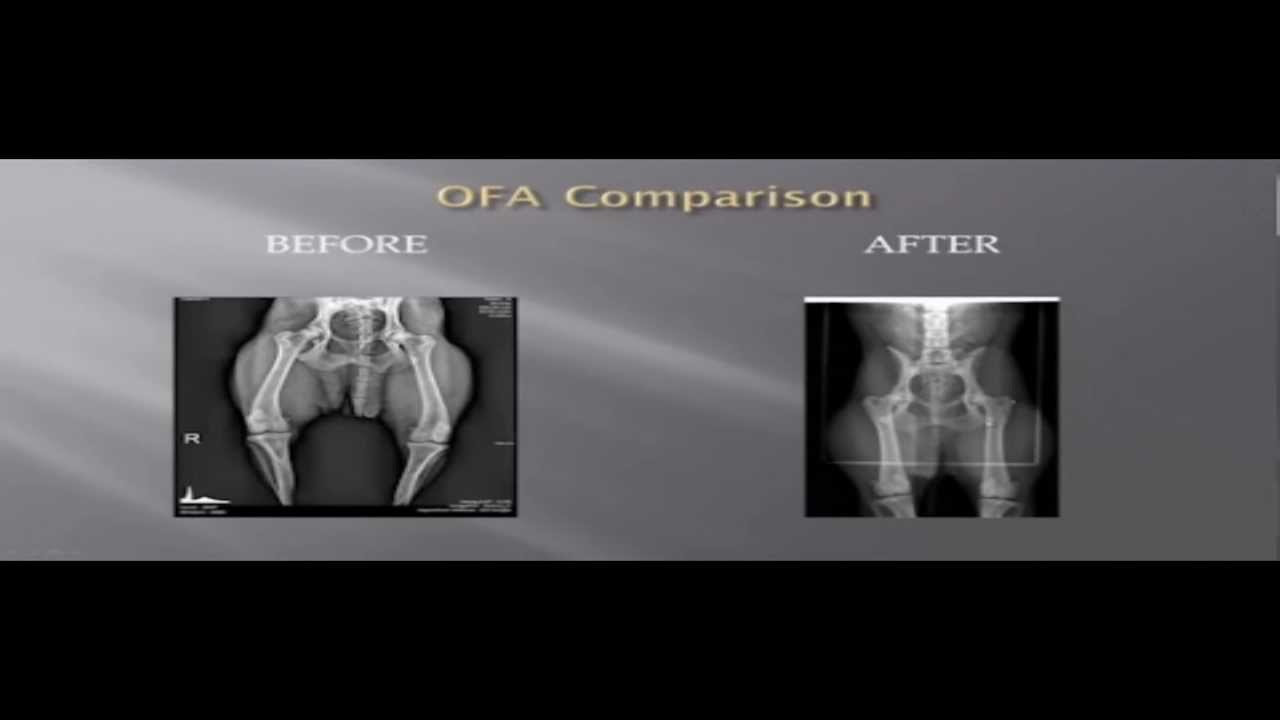
What a difference Proper Positioning Makes
We have worked out a really good feeding chart for our breed, but no one schedule can be accurate for all the Puppies even in a litter of 8. Some Puppies have other Dogs in the home to interact with, with big lawns and fenced, so this means lots of exercise, others lay around a house, the owner doesn't even allow the puppy to run indoors and when outside is always on a leash, this is no good, not enough exercise.
I lay it out the best I can on the chart, and anyone can call me anytime to ask me questions as their Puppy grows, the problem is....most will not call after they get the Puppy. So I try my very best to put as much info as I can into each person getting my Puppy....and well some are just simply turned of by that.